


Coin Identifier: Value Checker
4.5256.00 Reviews
App Specs
- Version
- 1.3.4
- Updated On
- License
- Free
- Downloads
- 100,000+
- Developer
- Codabrasoft LLC
- Categories
- Tools
- Platform
- Android
Screenshots
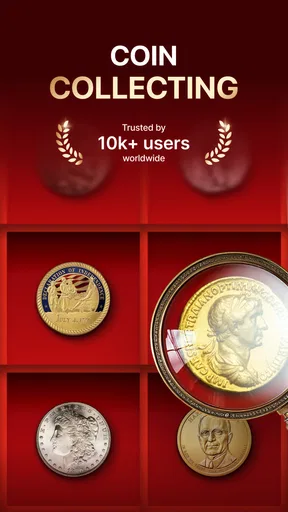
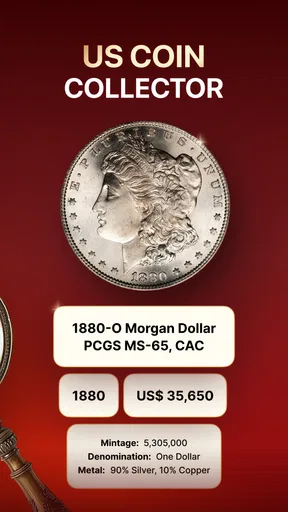
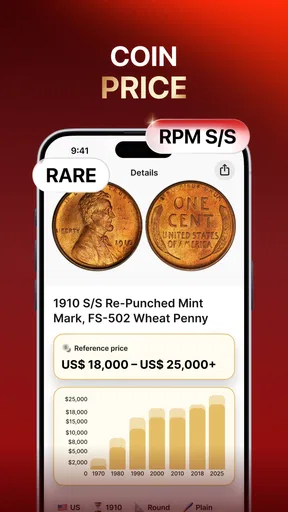
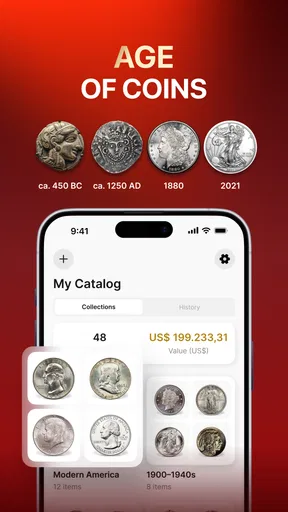
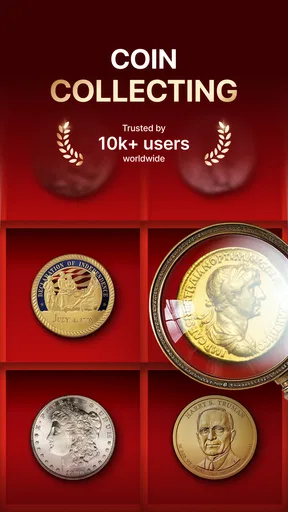
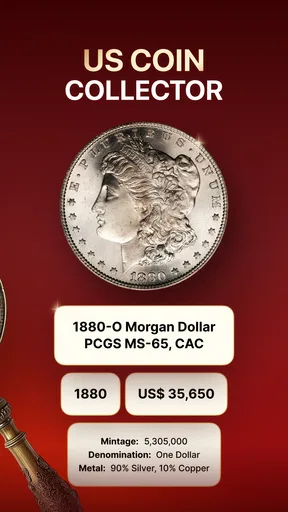
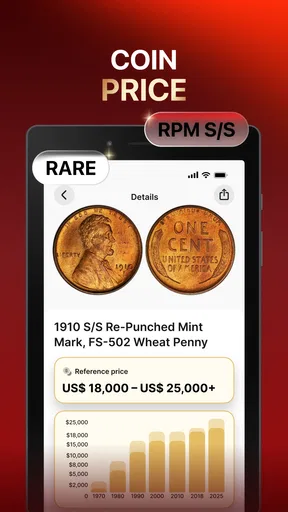
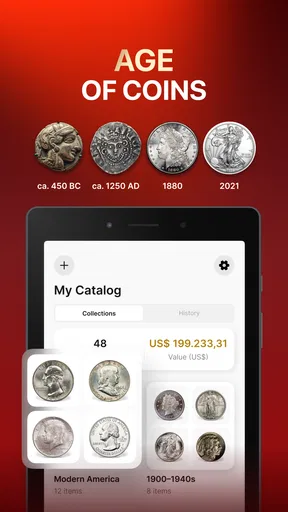
 Analysis by AppCompare
Coin collecting often begins with a small moment of uncertainty: you find an unfamiliar coin in a drawer, inherit a box from a relative, or notice an unusual mark while sorting change. Coin Identifier: Value Checker is designed for that exact starting point. It is a free tools app from Codabrasoft LLC that helps identify coins, explore their possible value, and organize a collection from a phone.
I found the app most useful as a first checkpoint rather than a final authority. Instead of immediately searching through scattered websites or comparing tiny details in collector forums, I could begin with a photo and use the result to decide what deserved closer attention. That makes it approachable for beginners, casual collectors, and anyone who has just discovered a handful of old coins and wants a sensible way to sort them.
From an Unidentified Coin to a More Organized Collection
When several people discover coins together, I find it helps to agree on a simple routine before the first photo: keep each coin with its own notes, and mark uncertain identifications as provisional. That small habit makes the move from an interesting find to a useful collection record clearer, which is the next part of making the app work well at home.
Starting with the coin in front of you
The best way to use this app is to begin with a clear question. You might want to know what a coin is, whether several coins belong together, or which pieces are worth researching further. That distinction matters because identification and valuation are related but not identical tasks. A coin can be correctly recognized while its actual selling value still depends on condition, rarity, authenticity, demand, and the quality of the specific example.
I would therefore treat the first result as a working description. It can help turn “some old coins” into a more useful starting point: a possible country, denomination, period, or type to investigate. That basic handoff—from a physical object to searchable information—is where the app makes the biggest difference.
Before taking a picture, I recommend placing the coin on a plain, non-reflective surface and checking both sides. Good lighting is more valuable than dramatic lighting. A bright window can create glare on worn metal, while a soft lamp positioned to the side can reveal lettering and raised details. Keeping the coin flat also makes the image easier to interpret.
It is worth cleaning the camera lens and avoiding fingers across the edge. I would not polish the coin itself. Cleaning may remove surface evidence and can reduce the appeal of a collectible, especially when the original finish is part of its condition. The app is better used on the coin as found, with careful photos rather than an altered surface.
Worth Reading Before You Choose

EA SPORTS FC Mobile 26 Is a Bigger Football Game, but It Takes Time

Flipboard Shows What News Apps Must Do Beyond the Feed

Switching to Android Auto Means Rethinking Your Driving Routine

Google Calendar Makes a Crowded Week Easier to Manage

Ludo King Makes the Most of the Minutes Between Plans

Baby Panda World Brings Quick Play to Modern Phones, but Its Game Library Feels Busy
The identification step and what to inspect afterward
Once the image is submitted, the useful part is not simply accepting the first label. I look at whether the suggested identity fits visible evidence: the denomination, lettering, portrait, date, mint mark, symbols, and overall design. If the suggestion feels close but not exact, the coin should be photographed again from another angle or checked against a reference outside the app.
This is one of the practical strengths of a visual identifier. It reduces the amount of terminology a beginner needs before starting. A person who does not know the difference between a mint mark and a design symbol can still begin with the object in hand, then learn those terms while checking the result. That is much less intimidating than opening a specialist catalog with no idea where to begin.
A useful workflow is to photograph the front and back separately in your own notes, then record the details that distinguish the coin from similar versions. Two coins may share a broad design but differ by date, mint mark, lettering variation, or metal composition. The app can point you toward the right family, but the final comparison still benefits from careful observation.
For beginners, I suggest resisting the temptation to photograph a whole pile at once and assume every result will be equally reliable. Sorting first is faster. Group coins by apparent country, size, design, or date, then process the unusual pieces individually. This reduces mix-ups and makes the later collection record much easier to understand.
Moving from identification to value
The value feature is helpful because it answers the question most people ask immediately after identification: “Is this worth keeping?” I see it as a screening tool. It can help separate ordinary pieces from coins that deserve more research, but it should not be read as a guaranteed offer or a fixed selling price.
Condition is the main reason for caution. A worn coin, a sharply preserved coin, and a damaged coin with the same date can occupy very different parts of the market. Scratches, cleaning, corrosion, bent edges, weak strikes, and missing details may all matter. A value estimate is therefore most useful when paired with an honest assessment of the actual coin rather than the best-looking example of that type.
There is also a practical emotional benefit to this stage. When sorting inherited coins, it is easy to spend an hour researching every ordinary piece and still feel unsure what matters. A quick value-oriented pass lets me prioritize. Coins with unusual dates, strong detail, or an unexpected result can move into a “research later” group, while common pocket change can be documented without taking over the entire afternoon.
I would not use the app alone to decide whether to sell a rare-looking coin. For a potentially valuable piece, compare the identification with reputable numismatic references and seek an experienced dealer or professional appraisal. The app helps you arrive at that conversation with better vocabulary and a clearer starting point.
Building a collection record instead of losing the result
The collection-management side is where the app becomes more useful than a one-off image search. Identification has limited value if the result disappears after the coin is put back in a box. Recording what you found creates a handoff from discovery to ownership: you can remember which coin was examined, keep similar pieces separate, and gradually build a personal inventory.
I recommend entering coins immediately after checking them, while the date and visual details are still fresh. Use a consistent naming habit, such as country followed by denomination and year, and add a short note about condition or anything unusual. Consistency matters more than writing long descriptions. A simple record is easier to maintain than an ambitious catalog that becomes too much work.
For inherited collections, this workflow can prevent a common problem: family members dividing coins without knowing which items belong together. Photographing and recording each piece before handing the collection to someone else creates a basic trail. It does not replace insurance documentation or a formal appraisal, but it gives everyone a shared reference point.
Another useful approach is to separate certainty levels in your own notes. Mark an item as identified, likely identified, or needing review. That small distinction prevents a tentative result from becoming an unquestioned fact months later. It also makes future research more efficient because you know exactly which entries still need attention.
The handoffs between app, collector, and outside research
The app works best as one part of a chain. The first handoff is from the physical coin to the camera. The second is from the image to a proposed identity. The third is from that identity to a collection record. The final handoff is from the record to a human decision: keep it, research it, show it to a specialist, or set it aside as a common example.
Thinking in those terms helps avoid overconfidence. A camera-based result can be a useful lead, but the collector still needs to verify the details that affect value. If the coin has an unusual edge, a tiny mint mark, or a date that is difficult to read, those details should be checked manually. The app may get you close enough to know what to look for, which is already a meaningful improvement over starting with no direction.
This is also where the app differs from the usual alternatives. A general image search can produce broad visual matches, but it often leaves you to judge which result is relevant. A spreadsheet gives you excellent control over your own records, yet it does not help much with the initial identification. Specialist catalogs are deeper, but they can be demanding for a newcomer. Coin Identifier: Value Checker sits between those options: quicker than a manual catalog search and more collection-focused than a simple reverse-image lookup.
That middle position is both its appeal and its limitation. It is convenient for triage and everyday organization, while serious collectors may still prefer established catalogs, auction archives, grading resources, and specialist communities for final decisions. I would use the app to narrow the field, then switch tools when accuracy, provenance, or market evidence becomes important.
A realistic afternoon use case
Imagine finding a small tin of coins while clearing a grandparent’s desk. You have no labels, several currencies, and only a vague idea that some pieces may be old. I would first spread them out, remove obvious duplicates, and photograph the clearest examples one by one. The app could then help group them by likely identity and give me a starting point for deciding which pieces deserve closer inspection.
After that first pass, I would create collection entries rather than leaving the coins in separate temporary piles. I would note visible dates, unusual marks, and any uncertainty. The coins that look ordinary could be stored together with their basic records, while the few that appear unusual could be photographed again and compared with external references.
The outcome is not necessarily a valuable discovery. The real result is a manageable inventory and a shorter research list. If one coin turns out to be important, the record makes it easier to explain where it came from and why it caught my attention. If none are rare, the app has still turned an anonymous box into an organized personal collection.
Where the workflow breaks down
The biggest weakness is the unavoidable difficulty of reading worn or poorly photographed coins. Glare, low contrast, tiny lettering, unusual shapes, and partial damage can all lead to an uncertain or incorrect match. This is not a reason to dismiss the app, but it is a reason to improve the input before trusting the output.
Another friction point is the gap between an estimated value and a real transaction. Collectors often care about the difference between catalog value, dealer price, auction result, and what a buyer is actually willing to pay. Those figures are not interchangeable. If you are expecting the app to function as a complete marketplace valuation service, it may not meet that expectation.
There is also a learning curve in maintaining a collection properly. The app can make recording easier, but it cannot decide how detailed your catalog should be or how carefully you should verify an unusual variety. Someone with a large, highly specialized collection may eventually want more advanced fields, deeper historical references, or a dedicated numismatic database.
For that reason, I would skip this app if your only goal is a professional-grade appraisal of a single potentially rare coin. Go directly to a qualified specialist and bring clear photos or the physical item. I would also choose a traditional catalog first if you already know the coin’s country and series and want exhaustive variety information rather than a quick starting point.
On the other hand, the app is a strong fit if you are new to collecting, sorting inherited coins, identifying pieces found while traveling, or trying to create order before spending money on specialist references. Its free entry point makes experimentation easy, while optional in-app purchases ranging from $7.99 to $49.99 per item mean that anyone considering paid tools should first decide how seriously they intend to use the collection features.
Practical details before installing
The app is available for free, is rated for Everyone, and works on Android starting with version 8.0. It reached version 1.3.4, which suggests that the experience has continued to receive product updates since its release on January 29, 2025. Codabrasoft LLC is the developer, and the app has built an average rating of 4.5 from around 6.6 thousand ratings, with over 100 thousand installs.
Those figures make it easier to place the app in context: it is not an obscure experiment with no visible user adoption, but it is also not a substitute for the established body of knowledge used by serious numismatists. The Everyone rating makes it suitable for family use, although younger users should still be guided when handling valuable or sharp-edged objects and when interpreting financial estimates.
Before paying for anything, I would run a small test with several coins whose identities you already know. Try a clear modern coin, a worn coin, and one with small lettering. This gives you a better sense of how well the workflow fits your collection than relying on a single successful scan. It also helps you decide whether the organization features are valuable enough for your habits.
My final take on the complete workflow
I like Coin Identifier: Value Checker because it addresses the frustrating first stage of collecting: not knowing where to begin. The app gives a physical coin a possible identity, turns that identity into a research direction, and encourages you to keep a record instead of repeatedly starting from zero. That sequence is more useful than a bare identification result.
My recommendation comes with one important boundary: use it to sort, learn, prioritize, and organize, not to make a high-stakes valuation decision without verification. Clear photos, both sides of the coin, careful notes, and a willingness to check unusual results will make the experience much more reliable.
For beginners and casual collectors, the app is a practical bridge between a mystery coin and a sensible next step. For advanced collectors, it is more likely to be a convenient intake tool than a complete replacement for specialist references. If that matches what you need, the free download is an easy way to start turning loose coins into a collection you can actually understand and manage.
Pros
- Quickly identifies many common coins using your phone’s camera.
- Useful for checking approximate values while sorting a collection.
- Simple interface that is easy for beginners to navigate.
- Helpful reference for learning coin names
- countries
- and designs.
- Convenient for spotting potentially interesting coins on the go.
Cons
- Recognition can be less accurate with worn
- dirty
- or poorly lit coins.
- Estimated values may vary from current auction and dealer prices.
- Rare or recently issued coins may not be included in the database.
- Camera results depend heavily on image quality and viewing angle.
- Some features or detailed information may require in-app purchases.
FAQs for Coin Identifier: Value Checker
What is Coin Identifier: Value Checker used for?
Coin Identifier: Value Checker is designed to help users recognize coins and learn more about their possible value. After photographing or uploading an image of a coin, the app can provide identification details such as country, denomination, year, and other collectible information. It is useful for beginners, casual collectors, and anyone who wants a quick starting point when examining coins.
How accurate is the coin recognition feature?
The recognition feature can be helpful, but its results should be treated as an estimate rather than a guaranteed identification. Image quality, lighting, camera focus, coin condition, unusual mint marks, and the availability of similar examples can affect the result. For valuable or rare coins, compare the information with reputable catalogs, auction records, or a professional numismatist before making a purchase or sale.
Can Coin Identifier: Value Checker determine the exact selling price of a coin?
The app may provide an estimated value or general pricing information, but it cannot guarantee the exact amount a coin will sell for. Market price depends on authenticity, grading, rarity, demand, mint errors, provenance, and the marketplace used. A coin in excellent condition may be worth considerably more than the same issue with damage, cleaning, scratches, or heavy wear.
What kind of photos should I take for the best results?
For more reliable results, photograph both sides of the coin in bright, even lighting and place it on a plain background. Keep the camera steady, avoid glare and shadows, and make sure the date, lettering, design, and mint mark are clearly visible. Clean the camera lens, but do not clean or polish the coin itself, since cleaning can reduce its collectible value.
Is Coin Identifier: Value Checker free to download and use?
The app’s availability, features, and pricing can vary depending on the Android or iOS version and the current store listing. Some functions may be available at no cost, while advanced identification tools, unlimited searches, or detailed value information may require advertising, in-app purchases, or a subscription. Before downloading, review the store page carefully for current prices, renewal terms, and privacy details.


